الإنتاجية والكفاءة هما مفاهيم مشابهة ولكنهما يختلفان في كيفية قياسهما وتركيز أهدافهما.

Productivity and efficiency are similar concepts but differ in the way they are measured and the focus of their objectives. Productivity is a measure of how much output is produced given a certain amount of inputs and resources. It is focused on producing more output with the same amount of resources or maintaining the same output with fewer resources. Therefore, productivity is a measure of the output per unit of input. Productivity formula: Output / Input Efficiency, on the other hand, is a measure of how well a manufacturing system, operation, or process is utilizing its resources to get the desired results. It focuses on optimizing the use of resources to achieve the required output without wasting resources or time. Therefore, efficiency is a measure of how well a system or operation is performing relative to its potential. Efficiency formula: (Achieved output / Expected output) x 100% In summary, - Productivity is the output per unit of input. - Efficiency is the comparison of actual output to expected output. Key Difference: 1. Focus: Productivity focuses on producing more output with the same amount of resources or maintaining the same output with fewer resources. Efficiency focuses on optimizing the use of resources to achieve the required output without wasting resources or time. 2. Measure: Productivity is measured by the output per unit of input. Efficiency is measured by the comparison of actual output to expected output. 3. Objectives: The primary objective of productivity is to increase output while reducing costs as much as possible. In contrast, the primary objective of efficiency is to ensure optimal use of the available resources and minimize any wastages. 4. Scope: Productivity is concerned with the entire production process, while efficiency focuses on specific techniques and resources used in the production process. 5. Impact: Improving productivity leads to an increase in output, thus contributing to economic growth. However, improving efficiency leads to higher quality output while decreasing the time and cost of production. 6. Factors that impact: While various factors influence productivity, including human resources, technology, and production processes, the factors that affect efficiency include operational procedures, quality management, and process controls. 7. Connection: While productivity and efficiency are intrinsically linked, they are not interchangeable terms. High productivity can lead to better efficiency, but when efficiency is improved, the productivity of a production system will increase. #technology #quality #manufacturing #growth #management #management #productivity #humanresources Picture Source: https://lnkd.in/dhz6mynW
الإنتاجية والكفاءة هما مفاهيم مشابهة ولكنهما يختلفان في كيفية قياسهما وتركيز أهدافهما.
الإنتاجية هي قياس لكمية المخرجات المنتجة بناءً على كمية معينة من المدخلات والموارد. تركز الإنتاجية على إنتاج المزيد من المخرجات باستخدام نفس كمية الموارد أو الحفاظ على نفس المخرجات باستخدام موارد أقل. لذا، تعتبر الإنتاجية قياسًا للمخرجات بالنسبة لوحدة المدخلات.
صيغة الإنتاجية:
مخرجات / مدخلات
من ناحية أخرى، الكفاءة هي قياس لمدى استخدام نظام التصنيع أو العملية أو العمل بكفاءة للحصول على النتائج المطلوبة. تركز الكفاءة على تحسين استخدام الموارد لتحقيق المخرجات المطلوبة دون إضاعة الموارد أو الوقت. لذا، تعتبر الكفاءة قياسًا لأداء النظام أو العملية بالمقارنة مع إمكانياتها.
صيغة الكفاءة:
(المخرجات المحققة / المخرجات المتوقعة) × 100٪
لتلخيص الفكرة:
- الإنتاجية هي المخرجات بالنسبة لوحدة المدخلات.
- الكفاءة هي مقارنة المخرجات الفعلية بالمخرجات المتوقعة.
الاختلافات الرئيسية:
1. التركيز: الإنتاجية تركز على إنتاج المزيد من المخرجات باستخدام نفس كمية الموارد أو الحفاظ على نفس المخرجات باستخدام موارد أقل. الكفاءة تركز على تحسين استخدام الموارد لتحقيق المخرجات المطلوبة دون إضاعة الموارد أو الوقت.
2. القياس: تُقاس الإنتاجية بالمخرجات بالنسبة لوحدة المدخلات
. يُقاس الكفاءة بالمقارنة بين المخرجات الفعلية والمخرجات المتوقعة.
3. الأهداف: الهدف الأساسي للإنتاجية هو زيادة المخرجات مع تقليل التكاليف قدر الإمكان. بالمقابل، الهدف الأساسي للكفاءة هو ضمان استخدام الموارد المتاحة بشكل مثلى وتقليل أي إهدار.
4. النطاق: الإنتاجية تتعلق بعملية الإنتاج بأكملها، في حين يركز الكفاءة على تقنيات وموارد محددة تستخدم في عملية الإنتاج.
5. التأثير: تحسين الإنتاجية يؤدي إلى زيادة المخرجات، مما يسهم في النمو الاقتصادي. ومع ذلك، تحسين الكفاءة يؤدي إلى إخراج ذو جودة أعلى مع تقليل الوقت والتكلفة للإنتاج.
6. العوامل التي تؤثر: هناك العديد من العوامل التي تؤثر في الإنتاجية، بما في ذلك الموارد البشرية والتكنولوجيا وعمليات الإنتاج. ومن ناحية أخرى، العوامل التي تؤثر على الكفاءة تشمل إجراءات التشغيل وإدارة الجودة وضوابط العمليات.
7. الارتباط: على الرغم من أن الإنتاجية والكفاءة مرتبطتين بشكل أساسي، إلا أنهما ليستا مصطلحين قابلين للتبديل. يمكن أن تؤدي الإنتاجية العالية إلى تحسين الكفاءة، ولكن عندما يتم تحسين الكفاءة، ستزيد إنتاجية نظام الإنتاج.
Productivity vs Efficiency: What’s the Difference, and How to Maximize Both
by nic | Oct 14, 2021
team meeting discussing productivity vs efficiency
Productivity and efficiency are two words people often use interchangeably.
But, do these words mean the same thing?
When people say you should be more productive, are they saying you should be more efficient, and vice versa?
Well, not quite.
Even though both words have similarities, they have distinctly different meanings.
Just because you’re productive doesn’t mean you’re efficient and vice versa.
So, without maximizing both, you could end up stopping your business from achieving its highest potential.
Today, we’ll discuss everything you need to know about both terms, including their definition, examples, best practices, and ideas to maximize them.
Let’s start with the basics.
What is productivity?
The term “productivity” is relative to production. It measures the total output produced in a period (e.g., “I built two houses this month”).
Productivity can be absolute, as it refers to the number of outputs you produce, regardless of the production of others.
But it can also be relative.
If you can produce three cakes in a working day, but a competitor produces four in the same period, we can say that your competitor is more productive.
A visual representation of productivity In other words, productivity measures the performance of your production in relation to any factor of production, not just time.
In economics, “factors of production” refers to the input required to produce a certain good or service, including:
Labor productivity: Calculates production per labor hour (e.g., “I can bake three cakes every hour worked”).
Capital productivity: Determines your overall productivity based on how much capital you use to produce an output (e.g., “To produce 40 cakes, I need to use the oven for 16 hours, which costs me $40”).
Material productivity: Measures your productivity based on material units needed (e.g., “To produce a cake, I need 30 material units”)
Multifactor productivity: Indicates your productivity by combining all other factors.
The most commonly used, though, are labor and capital.
For example, let’s imagine that you own a manufacturing company that produces cars.
You could measure the productivity of your employees by comparing the number of cars produced per labor hour.
If an employee produces three cars per labor hour and another produces just one, the first is more productive.
You could also compare your employee’s productivity against “dollar inputs” (i.e., how much it costs to produce a unit).
If an employee can produce, say, a car per dollar input, and the other produces 0.5 cars, the first one is more productive in terms of economic productivity.
الإنتاجية مقابل الكفاءة: ما الفرق بينهما وكيفية الاستفادة من كلاهما
بواسطة نيك | 14 أكتوبر 2021
اجتماع الفريق يناقش الإنتاجية مقابل الكفاءة
غالبًا ما يستخدم الناس كلمتي "الإنتاجية" و"الكفاءة" بشكل متبادل.
ولكن، هل تعني هذه الكلمات نفس المعنى؟
عندما يقول الناس إنه يجب أن تكون أكثر إنتاجية، هل يعنون أنه يجب أن تكون أكثر كفاءة، والعكس صحيح؟
حسنًا، ليس بالضبط.
على الرغم من أن الكلمتين لهما تشابهات، إلا أنهما لهما معانٍ مختلفة بشكل متميز.
فحتى لو كنت إنتاجيًا، لا يعني ذلك أنك كفء والعكس صحيح.
لذا، بدون الحصول على أقصى استفادة من كلاهما، يمكن أن تعوق عملك عن تحقيق أقصى إمكاناته.
اليوم، سنناقش كل ما تحتاج إلى معرفته عن كل من هذين المصطلحين، بما في ذلك تعريفهما، وأمثلة عليهما، وأفضل الممارسات، والأفكار لتحقيق أقصى استفادة منهما.
لنبدأ بالأساسيات.
ما هي الإنتاجية؟
يتعلق مصطلح "الإنتاجية" بالإنتاج. إنه يقيس الإخراج الإجمالي الذي تم إنتاجه خلال فترة ما (مثال: "لقد قمت ببناء منزلين هذا الشهر").
يمكن أن تكون الإنتاجية مطلقة، حيث تشير إلى عدد المخرجات التي تنتجها، بغض النظر عن إنتاج الآخرين.
ولكن يمكن أن تكون الإنتاجية أيضًا نسبية.
إذ
ا كنت قادرًا على إنتاج ثلاثة كعكات في يوم عمل، ولكن منافسًا ينتج أربعة في نفس الفترة، يمكننا القول إن منافسك أكثر إنتاجية.
بمعنى آخر، تقيس الإنتاجية أداء إنتاجك بالنسبة إلى أي عامل من عوامل الإنتاج، وليس فقط الوقت.
في الاقتصاد، "عوامل الإنتاج" تشير إلى المدخلات المطلوبة لإنتاج سلعة أو خدمة معينة، بما في ذلك:
إنتاجية العمالة: تحسب الإنتاجية لكل ساعة عمل (مثال: "يمكنني خبز ثلاث كعكات في كل ساعة عمل").
إنتاجية رأس المال: تحدد إنتاجيتك العامة بناءً على كمية رأس المال التي تستخدمها لإنتاج إخراج (مثال: "لإنتاج 40 كعكة، يتعين علي استخدام الفرن لمدة 16 ساعة، وتكلفتها 40 دولارًا").
إنتاجية المواد: تقيس إنتاجيتك بناءً على وحدات المواد المطلوبة (مثال: "لإنتاج كعكة واحدة، أحتاج إلى 30 وحدة مادة").
إنتاجية متعددة العوامل: تشير إلى إنتاجيتك عن طريق دمج جميع العوامل الأخرى.
على الرغم من ذلك، تستخدم بشكل أكثر شيوعًا إنتاجية العمالة وإنتاجية رأس المال.
على سبيل المثال، دعونا نتخيل أنك تمتلك شركة تصنيع تنتج سيارات.
يمكنك قياس إنتاجية موظفيك من خلال مقارنة عدد السيارات التي يتم إنتاجها في كل ساعة عمل.
إذا كان موظف ينتج ثلاث سيارات في الساعة الواحدة وآخر ينتج سيارة واحدة
فقط، فإن الأول هو أكثر إنتاجية.
يمكنك أيضًا مقارنة إنتاجية موظفك مقابل "المدخلات المالية" (أي ما هو التكلفة اللازمة لإنتاج وحدة واحدة).
إذا كان موظف يمكنه إنتاج، على سبيل المثال، سيارة واحدة لكل وحدة مالية، وينتج الآخر 0.5 سيارة، فإن الأول هو أكثر إنتاجية من حيث الإنتاجية الاقتصادية.
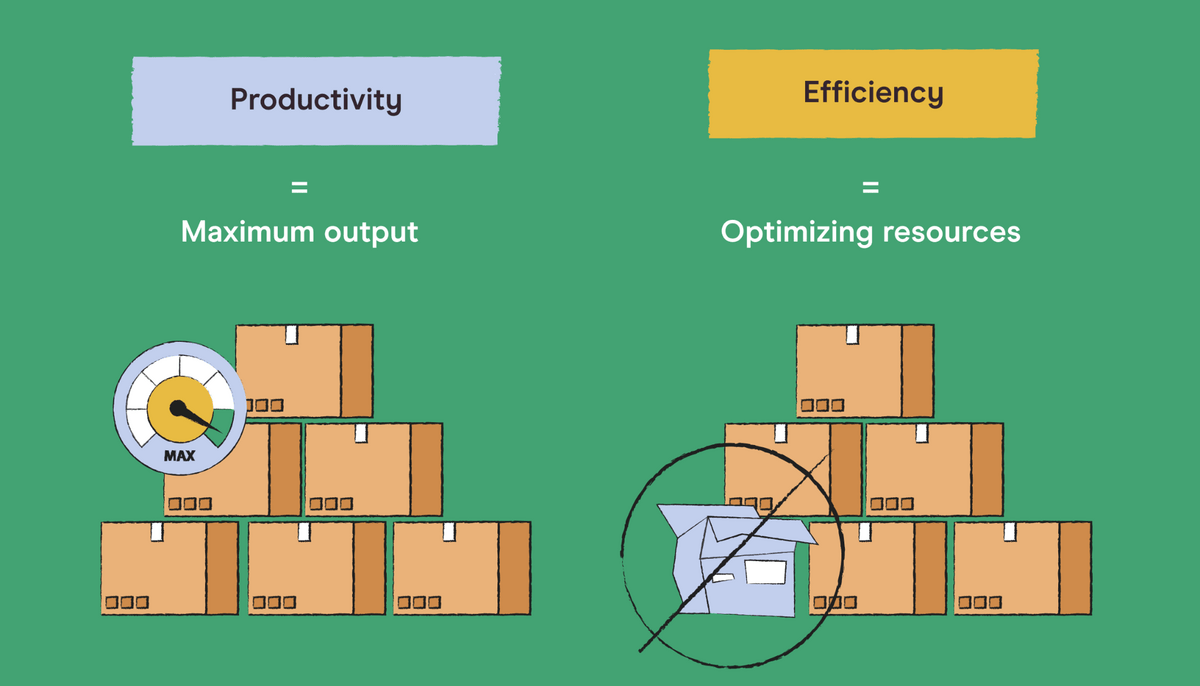
Productivity is all about maximizing your total output.
You need to define what success really means for you and then use that metric to measure your team’s productivity.
Why should you measure productivity in your organization?
First, your organization’s productivity dictates your capacity.
If you haven’t measured your productivity, you don’t really know what your maximum capacity is, and you might end up making a fatal deal that could hurt your business dramatically.
Following the manufacturing example, imagine you take on a new client that wants 1,000 cars per year, but you can only produce 500.
It won’t end well for you or the client when you belatedly discover you’re not going to be able to hit the target.
Productivity measurement is crucial because it tells you how much work you can take.
Second, you can’t grow what you don’t measure.
You see, teams aren’t as productive as you may think.
In a recent survey, roughly 8 out of 10 employees confessed they weren’t productive “throughout the whole working day.”
The same study found that, on average, employees are productive for less than three hours per day.
What does this mean for you?
If you don’t measure your organization’s productivity, you can’t pinpoint where the problems are and you’ll probably settle for less than your true capacity.
But, by measuring productivity across employees and time, you can pinpoint bottlenecks and other issues that are killing productivity and then work to remove these things.
What is efficiency?
Efficiency is a metric that measures the correct management and utilization of resources to produce a specific output.
Efficiency determines whether you’re using your available resources in the most effective, non-wasteful way.
A visual representation of efficiency
Efficiency is a comparative metric.
To know whether you’re efficient, you need to compare your current performance against benchmarks and standards.
These standards can be established by different factors, including:
Competition: How efficient are your competitors? (e.g., “My top competitor is producing each smartphone for just $100”).
Past performance: How efficient have you been in the past? (e.g., “Last year, our company was able to build a new desk in just two hours, using nine material units”).
Industry: How efficient are similar businesses in your industry(e.g., “The average winery can produce a bottle of wine every three seconds”).
Let’s say that you own a lemonade stand, and it costs you $1 to produce a glass of lemonade.
But all of a sudden, your neighbor decides to start a lemonade business too. The thing is, he can produce lemonades for just 50 cents.
In this scenario, your neighbor is more efficient than you — he can produce the same quantity of units with fewer resources.
There are different types of efficiency, and you need to determine which are most relevant for your business.
الإنتاجية تتعلق بتعظيم إجمالي الإخراج الخاص بك.
يجب عليك تحديد ما يعني النجاح حقًا بالنسبة لك واستخدام تلك المقياس لقياس إنتاجية فريقك.
لماذا يجب عليك قياس الإنتاجية في منظمتك؟
أولاً، إنتاجية منظمتك تحدد قدرتك.
إذا لم تقم بقياس إنتاجيتك، فأنت لا تعرف حقًا ما هي طاقتك القصوى، وقد تنتهي بصفقة قاتلة قد تؤثر سلبًا على عملك بشكل كبير.
على سبيل المثال، فيما يتعلق بالتصنيع، تخيل أن تتعاقد مع عميل جديد يرغب في الحصول على 1000 سيارة في السنة، ولكنك تستطيع إنتاج 500 سيارة فقط.
لن ينتهي الأمر بشكل جيد بالنسبة لك أو للعميل عندما تكتشف في وقت متأخر أنك لن تتمكن من تحقيق الهدف.
قياس الإنتاجية أمر حاسم لأنه يخبرك بكمية العمل التي يمكنك تحملها.
ثانيًا، لا يمكنك أن تنمو إلا إذا قمت بقياس ما تقوم به.
انظر، الفِرَق ليسوا بتلك القدرة الإنتاجية التي قد تظنها.
في مسح حديث، اعترف حوالي 8 من كل 10 موظفين بأنهم لم يكونوا "إنتاجيين طوال فترة العمل".
وأظهرت الدراسة نفسها أن الموظفين، بمتوسط، يكونون إنتاجيين لأقل من ثلاث ساعات في اليوم.
ماذا يعني ذلك بالنسبة لك؟
إذا لم تقم بقياس إنتاجية منظمتك، فلن تتمكن من تحديد مكان المشكلات وربما ستكون راضيًا عن أ
قل من طاقتك الحقيقية.
ولكن، عن طريق قياس الإنتاجية لدى الموظفين وعبر الوقت، يمكنك تحديد المشاكل والعقبات التي تعيق الإنتاجية والعمل على التخلص منها.
ما هي الكفاءة؟
الكفاءة هي مقياس يقيس الإدارة واستخدام الموارد المتاحة بشكل صحيح لإنتاج نتيجة محددة.
تحدد الكفاءة ما إذا كنت تستخدم الموارد المتاحة لديك بطريقة فعالة وغير مبذرة.
الكفاءة هي مقياس مقارن.
لمعرفة ما إذا كنت كفءًا، تحتاج إلى مقارنة أدائك الحالي مع المعايير والمقاييس.
يمكن تحديد هذه المعايير بواسطة عوامل مختلفة، بما في ذلك:
المنافسة: كفاءة منافسيك؟ (على سبيل المثال، "أعلى منافس لدي ينتج كل هاتف ذكي بتكلفة 100 دولار فقط").
الأداء السابق: كم كنت كفءًا في الماضي؟ (على سبيل المثال، "في العام الماضي، تمكنت شركتنا من بناء مكتب جديد في ساعتين فقط، باستخدام تسع وحدات مواد").
الصناعة: مدى كفاءة الشركات المماثلة في صناعتك (على سبيل المثال، "المتوسط لشركات النبيذ هو إنتاج زجاجة واحدة من النبيذ كل ثلاث ثوانٍ").
لنفترض أنك تمتلك محل عصائر ليمون، وتكلفتك 1 دولار لإنتاج كأس من عصير الليمون.
لكن فجأة، يقرر جارك أن يبدأ أعمالًا لبيع عصائر الليمون أيضًا. المشكلة هي أنه يمكنه إنتاج عصائر الليمون بسعر 50 سنتًا فقط.
في هذا السي
ناريو، جارك أكثر كفاءة منك - يمكنه إنتاج نفس الكمية بموارد أقل.
هناك أنواع مختلفة من الكفاءة، وتحتاج إلى تحديد أيها الأكثر صلة لنشاطك التجاري.
The most popular efficiency types include:
Allocative efficiency: Measures the efficiency of distributing your products and services in relation to customer preferences.
Productive efficiency: Determines how efficient you are in relation to producing the maximum outputs with the least amount of inputs and operating expenses.
Dynamic efficiency: Describes the progressive efficiency of your organization over time.
Social efficiency: Measures an organization’s efficiency in proportion to private and social costs involved in a decision.
X-efficiency: Determines the efficiency in which you can produce the maximum output in relation to management incentives.
Why should you measure efficiency in your organization?
Measuring your efficiency will help you identify areas of waste and revenue leaks in your organization, and develop ideas to fix them.
By identifying where you’re wasting most of your resources, you can design and implement initiatives to improve those areas and processes.
Following the lemonade stand example, if you find out that cutting lemons is your least efficient process, you could buy an automatic lemon slicing machine. This way, you could save time and become more efficient.
You might also discover that your provider is overpricing lemons.
By renegotiating costs or looking for a different provider, you could reduce costs and also become more efficient.
Without measuring your current efficiency, though, figuring out those things wouldn’t be possible.
Efficiency measuring will reveal opportunity gaps you can fill, as well as potential threats.
You should adopt a continuous improvement culture for your business and constantly monitor your least efficient processes.Otherwise, growing and scaling your business will be much harder.
Productivity vs. efficiency: the main differences
Now that you understand the basics of productivity and efficiency, let’s dig a bit deeper into the major differences between both terms.
To better understand these differences, let’s use an example.
You’re the owner of a woodworking shop and want to know how productive and efficient your employees are.
So, one day, you analyze the output of two workers.
To do it, you use the following benchmarks:
Average number of material units to build a desk: 10 units
Average time to build a desk: one hour
Employee A built 10 desks in 12 hours and used 150 material units.
Employee B built 5 desks in 3 hours and used 40 material units.
In this scenario, employee A was more productive because they produced more desks during the day.
But they were less efficient because it took them more time and materials to build each desk (an average of 1.2 hours and 15 material units per desk).
On the other hand, Employee B was more efficient. They used fewer resources to build each desk (0.6 hours and 8 material units per desk).
But, they were less productive because they produced fewer desks that day.
In short, the main difference between productivity and efficiency lies in the objective of each.
Productivity maximizes outputs, whereas efficiency aims to optimize resources.
Productivity vs efficiency explained
Three tips to maximize your productivity and efficiency
At this point, you already understand the main differences between productivity and efficiency. Now the question becomes: How can you maximize both?
Here are three helpful tips:
1. Tap into automations
Manual work is one of the top productivity killers.
Think about the wine industry.
Back in the early 1900s, when wineries relied on manual-powered labelers, overall productivity depended on the operator’s speed. If the operators were quick enough, they could label around 10 bottles per minute (or 600 bottles per hour).
Nowadays, a fully automated labeler machine can label around 150 to 200 bottles per minute (about 9,000 to 12,000 bottles per hour).
That’s 20X more production.
By automating the labeling process, wineries now need fewer employees and resources to produce even more bottles.
So, automation increases not only your productivity but also your efficiency. It helps you reduce costs and optimize resources.
And the wine industry isn’t an isolated case.
Studies reveal that 30% of today’s most important tasks can be completely automated in 6 out of 10 industries.
With the help of technology and AI, you can automate repetitive tasks and processes, maximizing both productivity and efficiency.
The best part?
You don’t need deep pockets to tap into this trend.
Modern project management software can automate most of the day-to-day operations of most businesses, including reporting, communication, collaboration, and more.
2. Improve your talent selection and training
Many businesses are unproductive and inefficient. And it’s often because of bad processes, a lack of resources, or obsolete technology.
It’s because they don’t have the right talent.
Maybe their teams aren’t working hard enough. Perhaps they haven’t adapted to remote work. Or maybe they simply don’t have the required skills to complete the tasks.
Remember, a chain is only as strong as its weakest link.
In the same way, an organization is as strong as its weakest member.
By improving your talent selection and training processes, your team will be better equipped to solve issues faster, work more efficiently, and produce more.
For example, you could adopt a collaborative knowledge management system where members with specialized knowledge help one another.
You could also train your HR team and develop a more solid selection process.
It’s even possible to implement gamification to create a more enjoyable work environment.
The point is that you should look for ways to develop a more cohesive team capable of doing the work in the most efficient way possible and meeting your productivity standards.
3. Adopt business process reengineering As your organization grows, so does its complexity.
The more complexity you have in your processes and operations, the more productivity and efficiency barriers you’ll face.
Here’s where business process reengineering (BPR) comes into play.
Visual representation of the BPR cycle Business process reengineering is the discipline of breaking down your processes into pieces to find potential opportunity gaps.
The idea is that you should identify processes that aren’t meeting your standards and redesign those processes until you achieve the desired results. Thus, this is a continuous task.
This methodology consists of five main steps:
Identify process: Identify the process you want to redesign.
Review, update, and analyze: Identify all the elements that make up your process and spot potential problems or bottlenecks.
Design a new process: Remove and/or add steps in your process or start from scratch, if needed.
Test and implement new process: Implement your new process and analyze results.
Repeat: Repeat the cycle until you achieve the desired results.
BPR goes hand in hand with continuous improvement and can help you maximize both productivity and efficiency.
The bottom line?
Productivity without efficiency can increase your costs and reduce the quality of your products and services.
On the other hand, efficiency without productivity might hurt your ability to scale and grow in highly competitive industries.
Hopefully, you now have a better understanding of the differences between these two terms and some ideas to get the best of both worlds.
https://www.paretolabs.com/productivity-vs-efficiency/
الإنتاجية مقابل الكفاءة: ما الفرق؟ - باريتو لابز
الإنتاجية مقابل الكفاءة: ما الفرق وكيفية الحصول على أقصى استفادة من كلاهما
بقلم نيك | 14 أكتوبر 2021
اجتماع الفريق يناقش الإنتاجية مقابل الكفاءة
غالبًا ما يستخدم الناس كلمتي "الإنتاجية" و"الكفاءة" استبدالًا لبعضهما البعض.
ولكن، هل تعني هذه الكلمات نفس المعنى؟
عندما يقول الناس إنك يجب أن تكون أكثر إنتاجية، هل يعنون أنك يجب أن تكون أكثر كفاءة والعكس صحيح؟
حسنًا، ليس تمامًا كذلك.
على الرغم من أن الكلمتين لهما تشابهات، إلا أن لهما معانٍ مختلفة تمامًا.
فحتى إذا كنت إنتاجيًا، لا يعني ذلك أنك كفء والعكس صحيح أيضًا.
لذلك، دون تحقيق الحد الأقصى لكلاهما، يمكن أن تتوقف عملك عن تحقيق أعلى إمكاناته.
اليوم، سنناقش كل ما تحتاج إلى معرفته حول كلتا المصطلحين، بما في ذلك تعريفهما، أمثلة عليهما، أفضل الممارسات، وأفكار للحصول على أقصى استفادة منهما.
لنبدأ بالأساسيات.
ما هي الإنتاجية؟
يعتبر مصطلح "الإنتاجية" نسبيًا للإنتاج. إنه يقيس الإنتاج الإجمالي المنتج في فترة زمنية معينة (على سبيل المثال: "قمت ببناء منزلين هذا الشهر").
يمكن أن تكون الإنتاجية مطلقة، حيث تشير إلى عدد المخرجات التي تنتجها بغض الن
ظر عن مخرجات الآخرين.
ومع ذلك، يمكن أيضًا أن تكون نسبية.
إذا كنت تستطيع إنتاج ثلاثة كعكات في يوم عمل، ولكن المنافس ينتج أربعة في نفس الفترة، يمكننا أن نقول إن المنافس لديه مستوى أعلى من الإنتاجية منك.
ما هي الكفاءة؟
على عكس الإنتاجية، ترتبط الكفاءة بالموارد والجودة. إنها تقيس مدى كفاءة استخدام الموارد لتحقيق المخرجات المرجوة.
على سبيل المثال، إذا تمكنت من إنتاج نفس الكمية من المنتجات باستخدام أقل من الموارد المطلوبة مقارنة بأحد المنافسين، فأنت تعمل بكفاءة أعلى.
والكفاءة يمكن أن تكون مطلقة أيضًا، حيث يتم استخدام أقل من الموارد المطلوبة لتحقيق نفس المخرجات مقارنة بالآخرين.
لتحقيق الكفاءة، يجب أن تكون قادرًا على تحقيق النتائج المرجوة بأفضل استخدام للموارد المتاحة، مثل الوقت والمال والعمالة والمواد الخام.
الفرق بين الإنتاجية والكفاءة
الفرق الرئيسي بين الإنتاجية والكفاءة يكمن في التركيز والمقاييس المستخدمة.
- الإنتاجية تقيس الإنتاج الإجمالي المنتج بغض النظر عن الموارد المستخدمة.
- الكفاءة تقيس كيفية استخدام الموارد لتحقيق المخرجات المرجوة.
ببساطة، يمكن أن يكون لديك مستوى عالٍ من الإنتاجية ولكن تعمل بكفاءة منخفضة، والعكس صحيح أيضًا.
كيفية تحقيق أقصى استفادة من الإنتاجية والكفاءة
لتحقيق أقصى استفاد
ة من الإنتاجية والكفاءة، يمكنك مراعاة النصائح التالية:
1. تحليل العمليات: قم بتقييم العمليات الحالية وتحليل كيفية استخدام الموارد وتحقيق المخرجات. ابحث عن فرص لتحسين الكفاءة وزيادة الإنتاجية.
2. التكنولوجيا والأتمتة: استخدم التكنولوجيا والأتمتة لتبسيط وتسريع العمليات وتحسين استخدام الموارد.
3. التدريب والتطوير: استثمر في تطوير المهارات وتدريب الفريق لزيادة كفاءتهم وتحسين أدائهم.
4. تفويض وتمكين الفريق: منح الفريق الصلاحيات والمسؤوليات لتمكينهم من اتخاذ القرارات وتحقيق الإنتاجية والكفاءة.
5. تحفيز الإبداع والابتكار: قم بتشجيع الإبداع والابتكار في العملية الإنتاجية لاستكشاف وتنفيذ أفكار جديدة لتحسين الأداء.
في النهاية، يتطلب الوصول إلى أقصى استفادة من الإنتاجية والكفاءة الجمع بين التركيز على زيادة الإنتاج وتحقيق الأداء المثلى باستخدام الموارد المتاحة.